A Technical Comparison for Material Selection
When selecting foam boards for construction, furniture, signage, or interior projects, WPC Celuka foam board and PVC foam board are often evaluated side by side.
From a technical perspective, these materials are based on different structural principles. Understanding their composition, physical properties, and processing behavior helps reduce risk during the project planning stage. This article focuses on technical performance rather than product preference.
1. Application-Oriented Material Selection
Choose WPC Celuka foam board when:
Choose PVC foam board when:
Dimensional stability is critical
Printing or signage is required
Fire performance is regulated
Long-term consistency is needed
2. Material Composition and Structural Logic
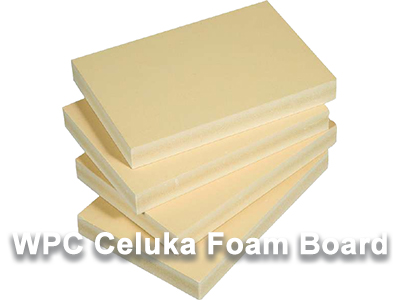
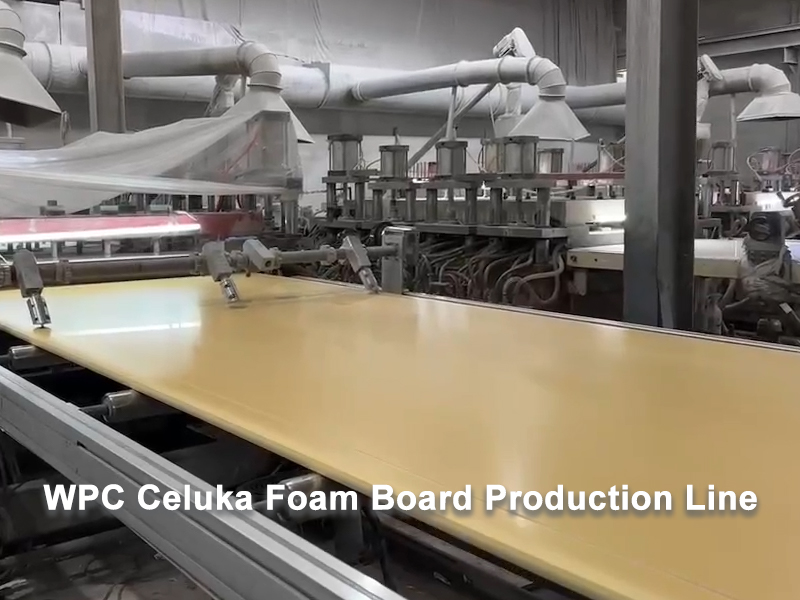
WPC (Wood Plastic Composite) Celuka foam board is produced by combining:
During Celuka extrusion, the wood fiber is encapsulated within the PVC matrix, forming a semi-cellular structure with higher surface density.
Technical implications:
Improved surface hardness
Wood-like tactile feedback
Slightly higher material anisotropy
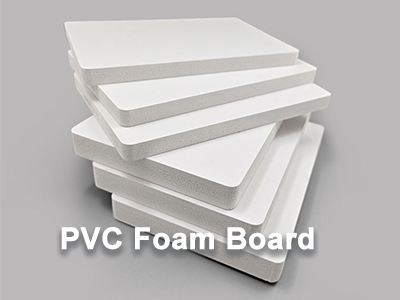
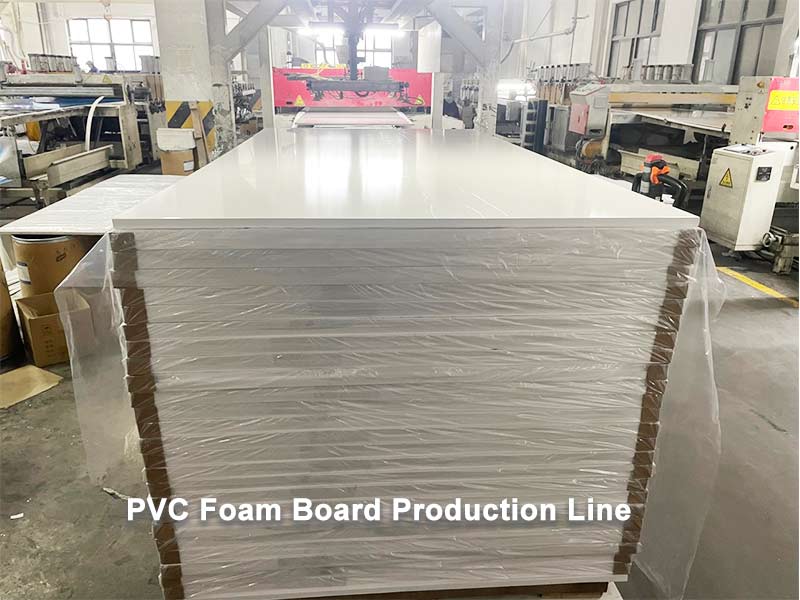
PVC foam board is manufactured using:
The internal structure is a uniform closed-cell foam with no organic components.
Technical implications:
3. Typical Technical Parameters (Reference Range)
| Category | Item | WPC Celuka Foam Board | PVC Foam Board | Comparison Summary |
| Material | Composition | PVC + wood fiber composite | Pure PVC foam | WPC behaves more like wood |
| Typical positioning | Structural / furniture grade | Decorative / industrial grade | Different application focus |
| Dimensions | Thickness (mm) | 5–25 | Typically 1–30 | Comparable |
| Standard sheet size | 1220 × 2440 mm | 1220 × 2440 mm (common) | Same customized size available |
| Density | Density | ≤ 800 kg/m³ | 0.35–0.90 g/cm³ | PVC can be lighter |
| Mechanical Properties | Tensile strength (MPa) | ≥ 10 | 12–20 | PVC higher |
| Elongation at break (%) | — | 15–20 | PVC more flexible |
| Bending strength (MPa) | ≥ 21 | 12–18 | WPC significantly stronger |
| Modulus of elasticity (MPa) | ≥ 600 | 800–900 | PVC more elastic |
| Impact strength (kJ/m²) | ≥ 13 | 8–15 | Similar |
| Surface & Fixing | Shore hardness (D) | ≥ 55 | 45–80 | WPC stable and rigid |
| Screw holding strength (N) | ≥ 800 | ≥ 800 | Same rating, WPC feels more wood-like |
| Thermal Properties | Vicat softening point | ≥ 70 °C | 73–76 °C | PVC slightly higher |
| Heating dimensional change (%) | ≥ 10 | 2 | PVC more dimensionally stable |
| Dimensional tolerance | ±2% | Smaller | PVC more precise |
| Moisture Resistance | Water absorption (%) | ≤ 1.0 | ≤ 1.0 | Equal |
| Fire Performance | Fire resistance | Not specified | Self-extinguishing < 5 s | PVC has clear advantage |
| Appearance | Color | As required | Standard white / customizable | Comparable |
WPC Celuka foam board:
High strength and hardness
Stable screw-holding capacity
Suitable for furniture, cabinets, partitions, and structural components
PVC foam board:
Lightweight and dimensionally stable
Heat-resistant and flame-retardant
Suitable for advertising boards, UV printing, cabinets, furniture, and interior decoration
4. Performance Characteristics: Advantages and Limitations
Advantages:
Surface texture similar to wood
Waterproof, insect-resistant, mold-resistant
Formaldehyde-free; no adhesive required
Can be sawed and nailed; woodworking-friendly
Environmentally friendly and recyclable
Limitations:
Sensitive to humidity due to wood fiber content
Dimensional stability may be affected in long-term high-humidity environments
Surface not ideal for high-precision printing
Limited flame-retardant performance
Advantages:
100% waterproof and moisture-proof
Flame-retardant with stable self-extinguishing behavior
Smooth surface suitable for printing and lamination
Density is stable and resists deformation
Good screw-holding capacity
Easy CNC processing, grooving, and carving
Limitations:
5. Different Application Scenarios
Projects better suited for WPC Celuka foam board:
Furniture panels
Decorative wall panels
Indoor or semi-outdoor applications
Where wood-like appearance is required
Emphasis on visual and tactile experience
Projects better suited for PVC foam board:
Advertising signage and display systems
Cabinets, partitions, and interior structural boards
Industrial processing applications
Projects requiring long-term stability and consistency
Applications with fire-retardant or printing requirements
6. Common Misconceptions: Complementary, Not Substitutable
Some clients ask:
These questions reflect a misunderstanding. In practice:
Choosing the wrong material is rarely about insufficient performance—it’s about mismatch with the intended use.
7. Goldensign’s Role: Providing Rational Solutions
Goldensign manufactures:
This allows us to advise based on project requirements rather than favoring a specific material, focusing on:
Environmental conditions
Processing methods
Expected service life
Appearance requirements
Cost structure
Many clients test both WPC and PVC during project initiation, and the final choice is based on actual usage conditions, not just specifications.
8. How to Make the Right Choice for Your Project
Consider these questions:
Will the material be used outdoors or in high-humidity conditions long-term?
Will printing or surface lamination be involved?
Is the priority decorative effect or structural stability?
Is large-scale, long-term supply required?
The answers will guide you to the most suitable material.
Need Technical Support for Material Selection?
If you are evaluating PVC or WPC Celuka foam board for a project, share your environment, thickness, density, and compliance requirements with us.
Goldensign’s technical team can assist with:
Material matching
Parameter confirmation
Sample testing support
Contact us to discuss your project with a manufacturer that understands both materials.